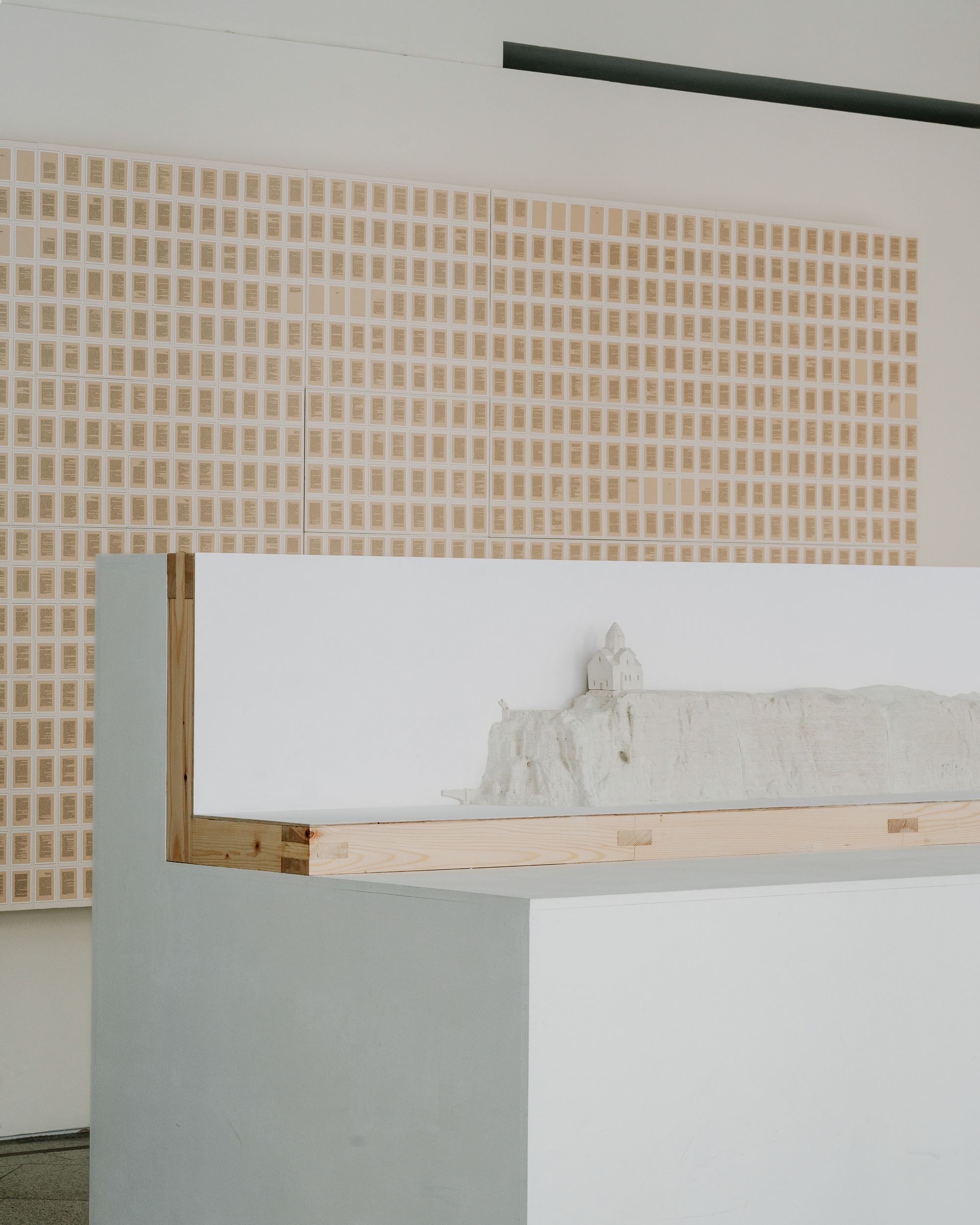
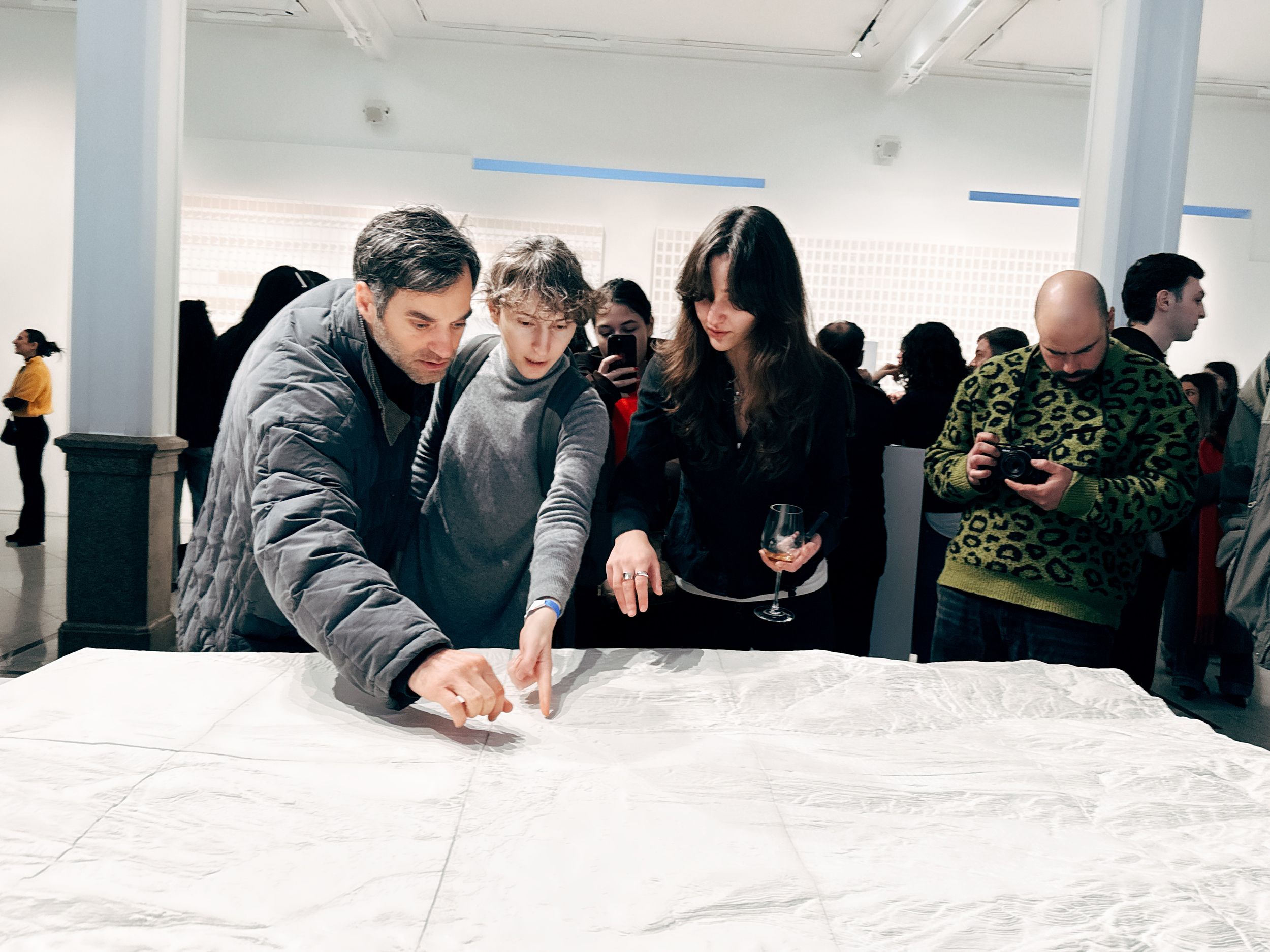
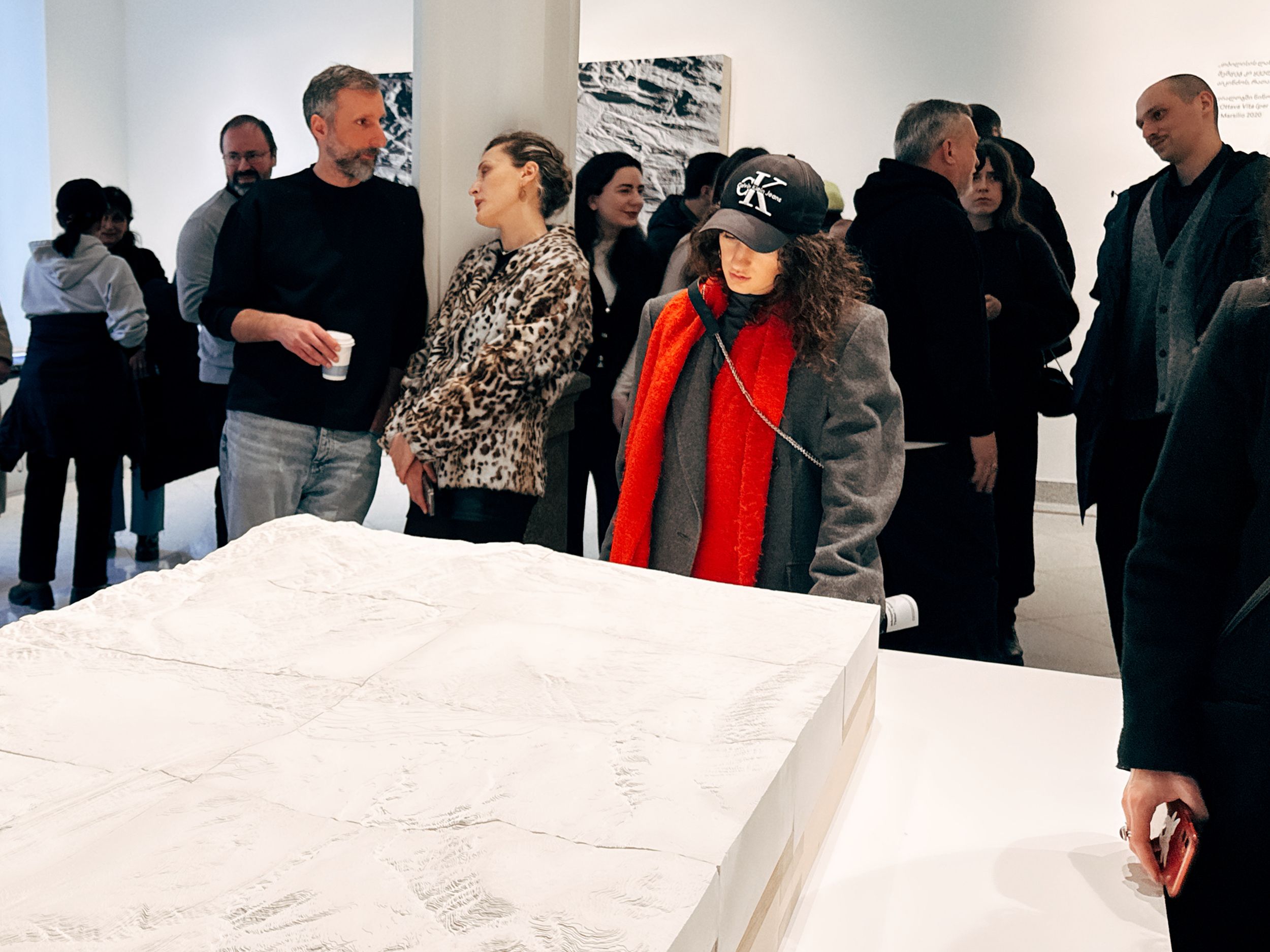
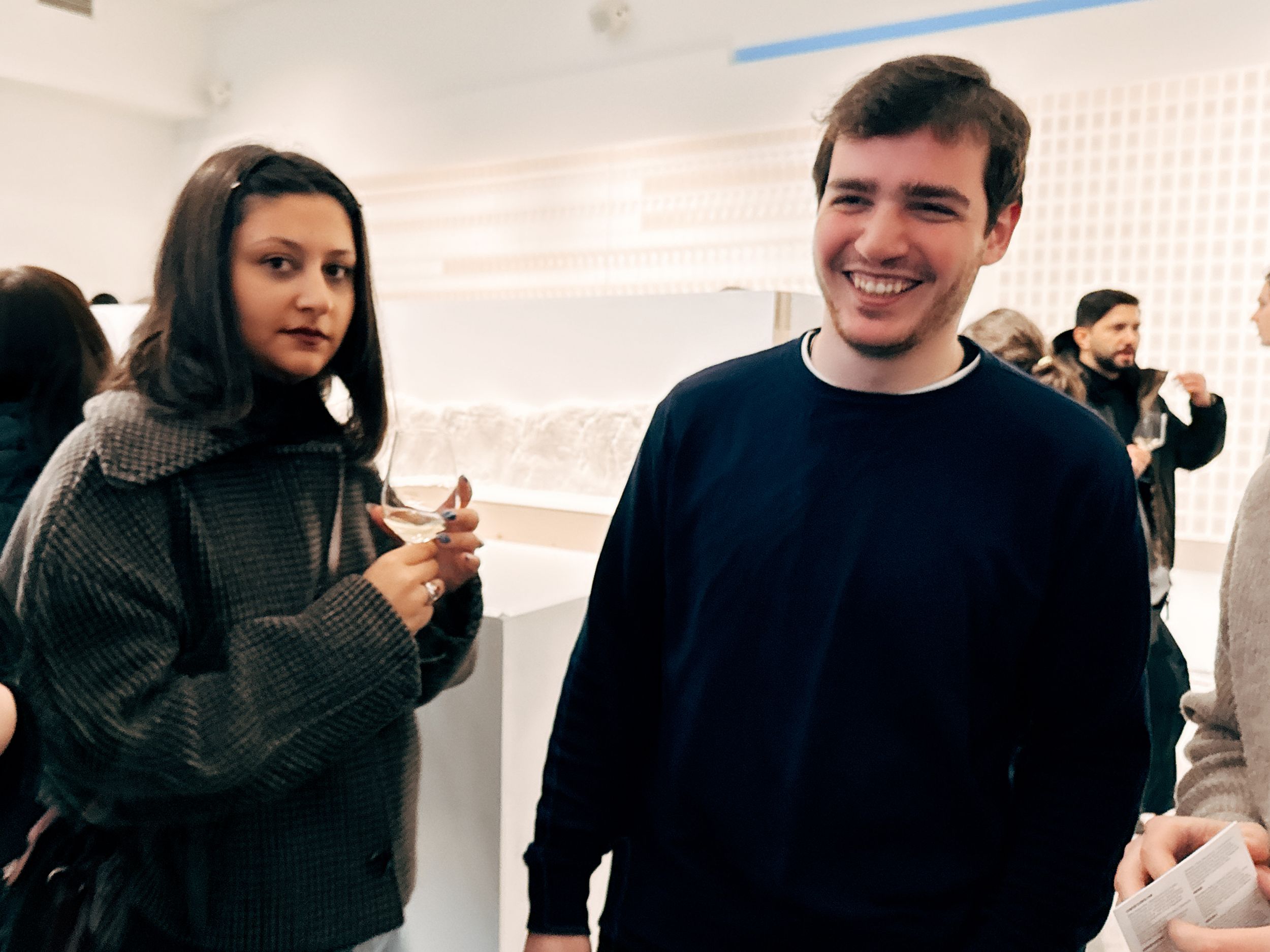
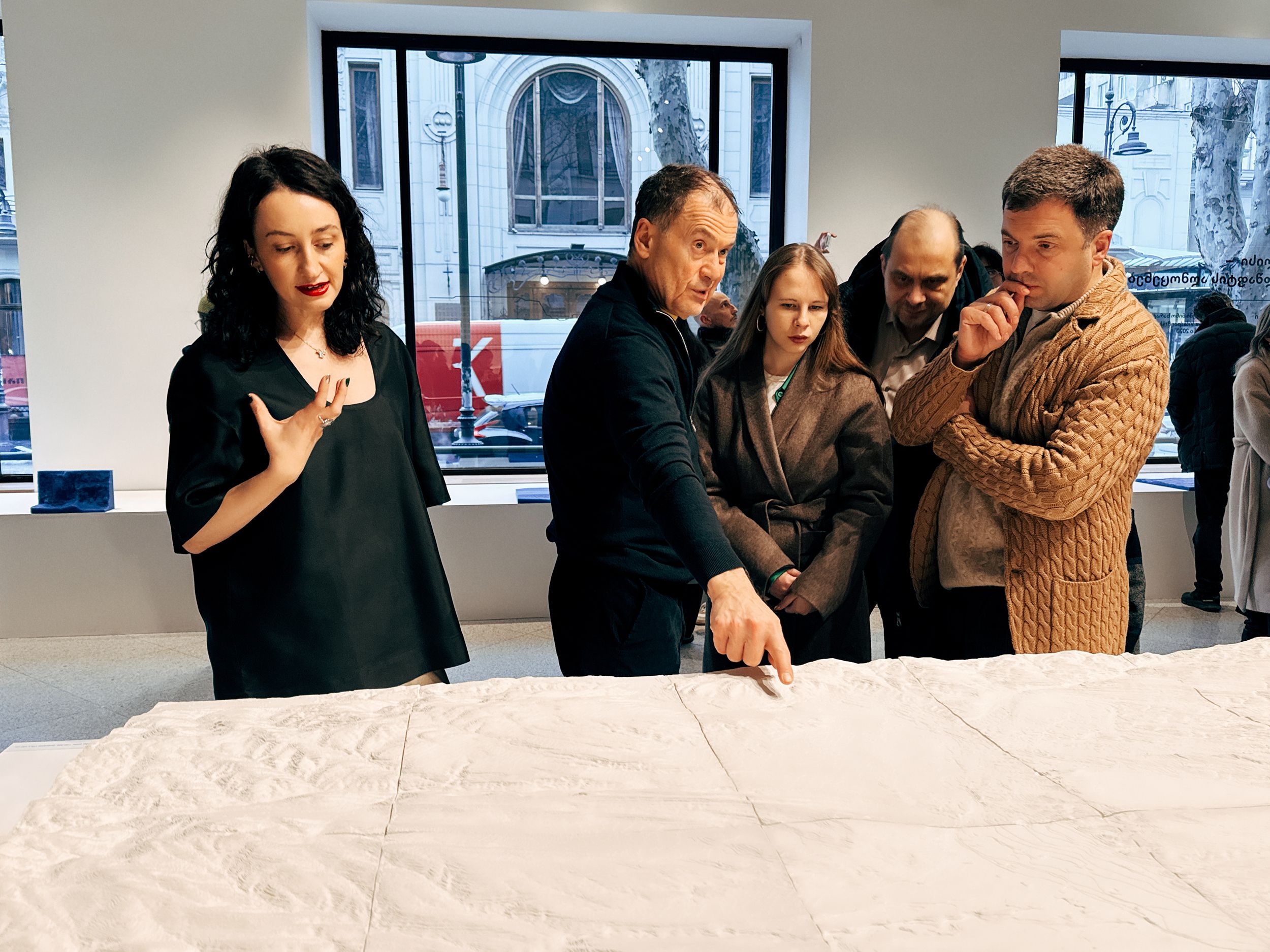
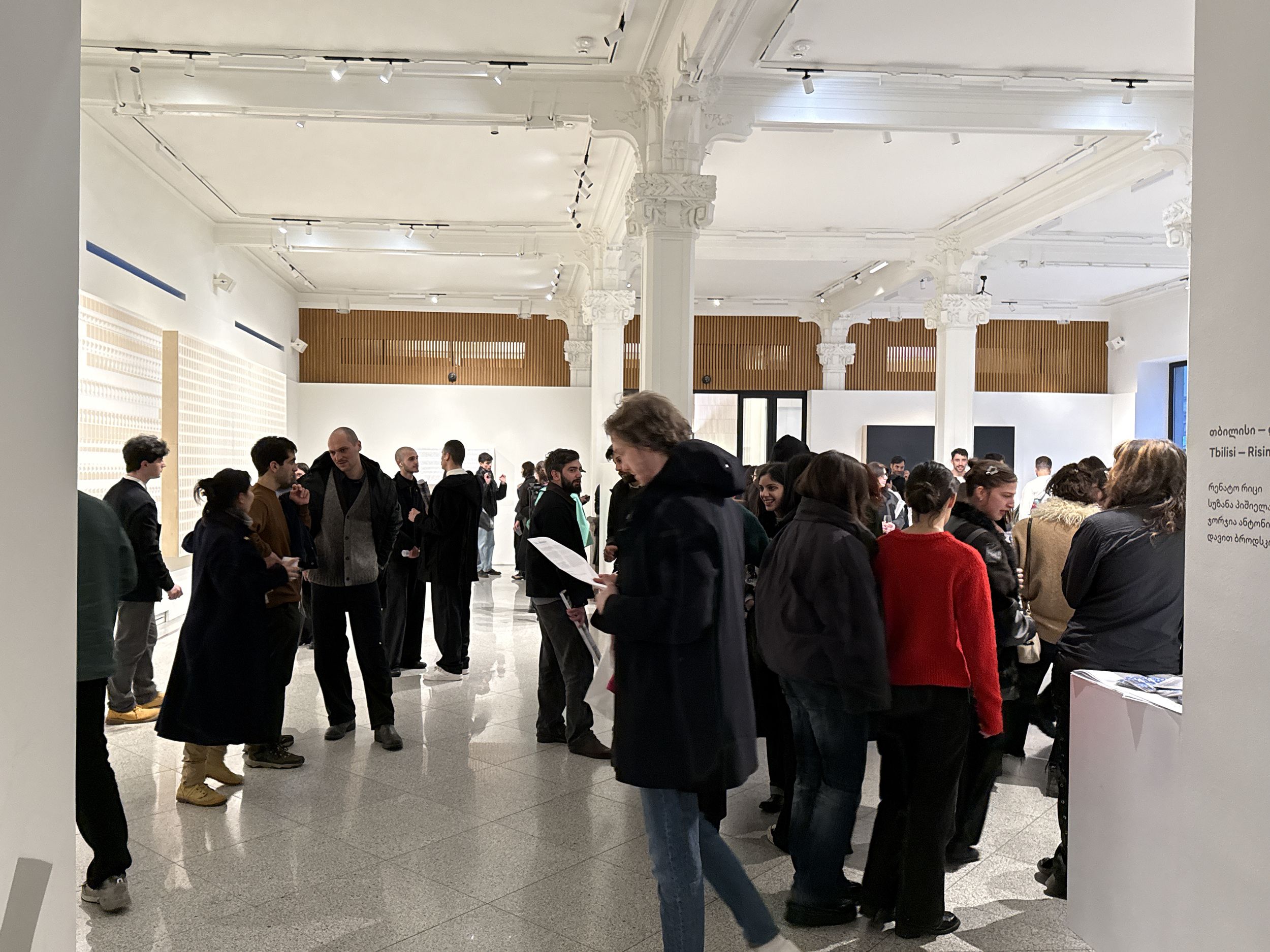
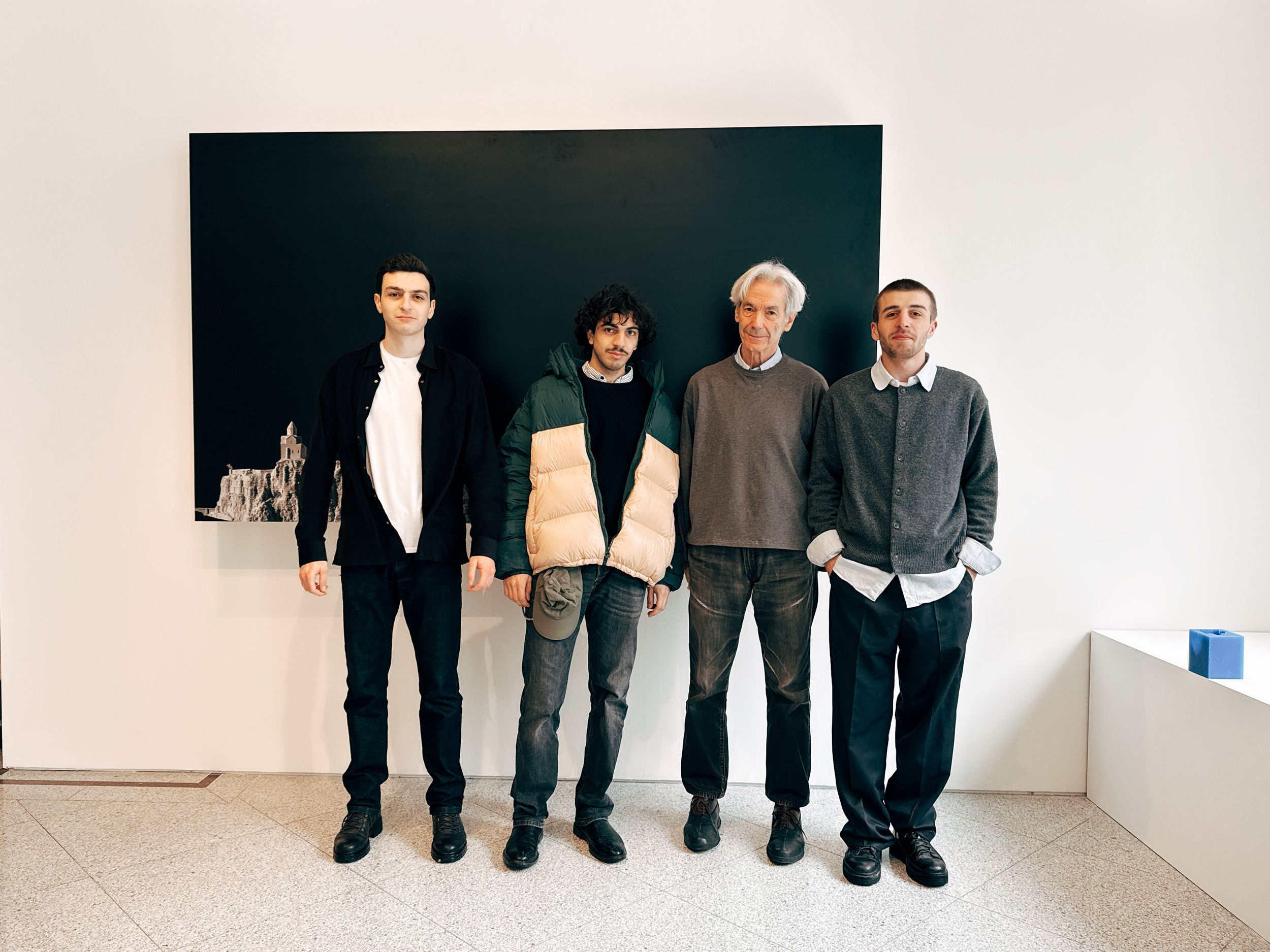
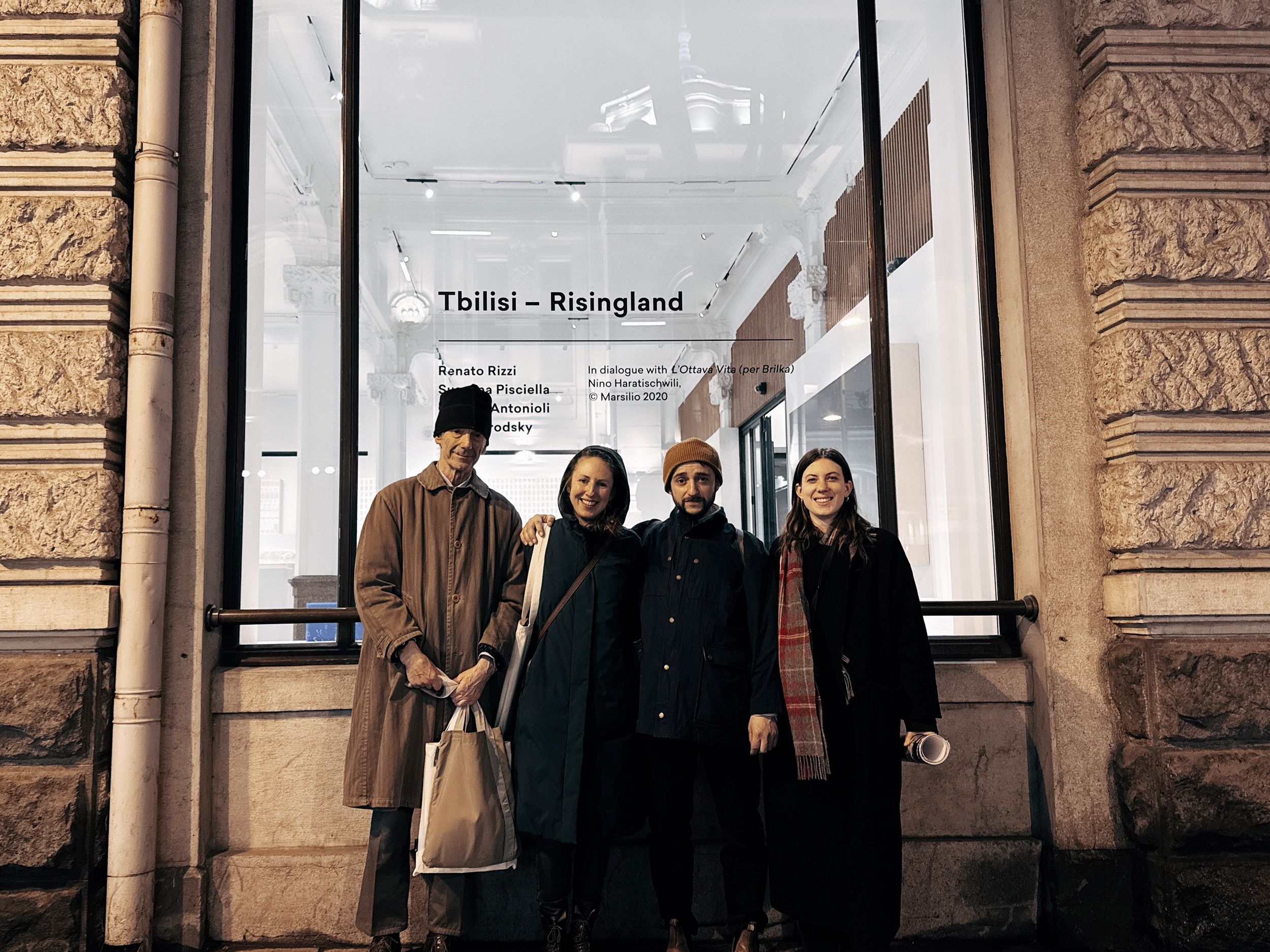
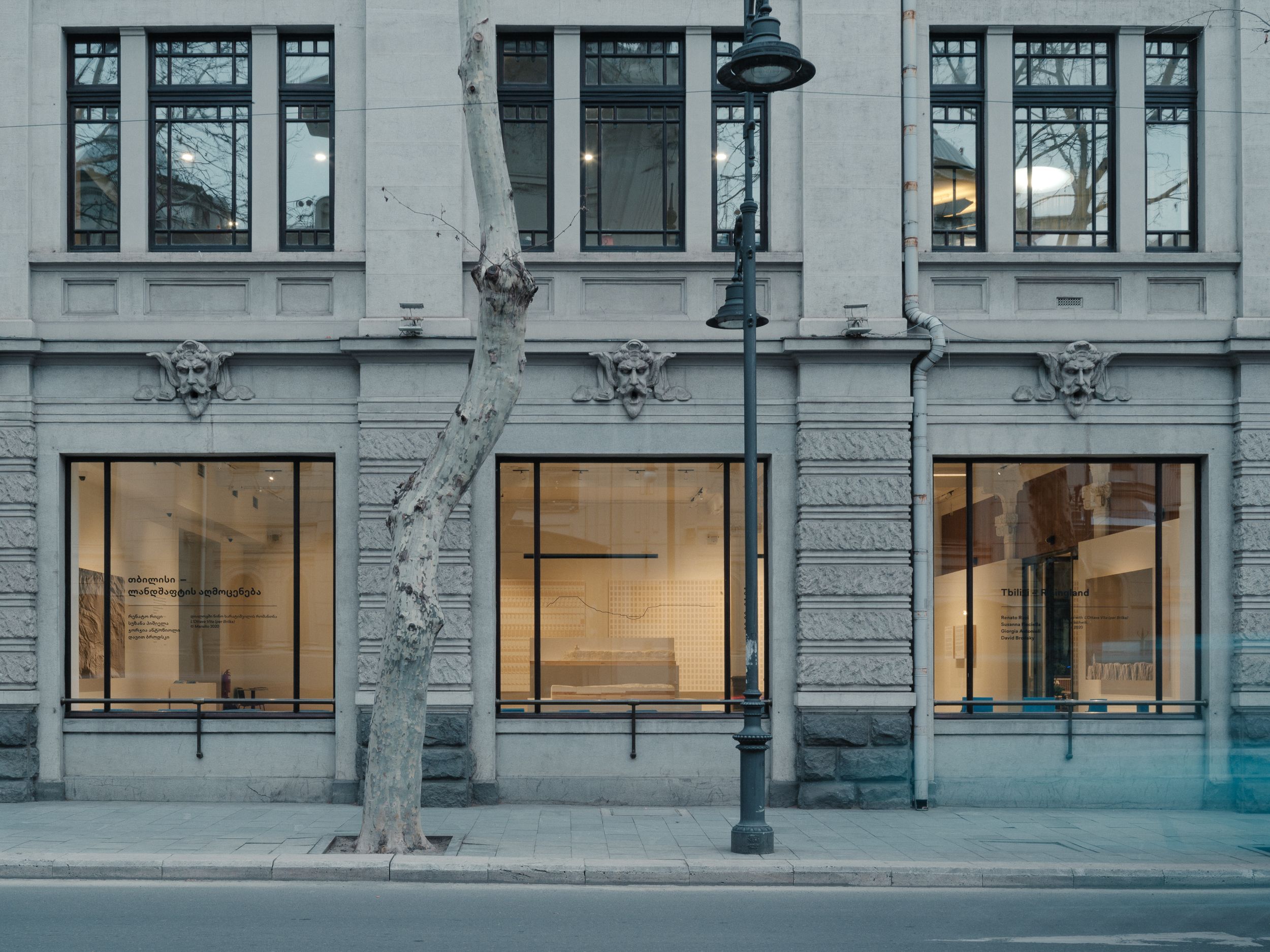
The exhibition opened on February 28th, welcoming more than 400 visitors. The opening was followed by a lecture by Italian architect and theorist Renato Rizzi, who developed the project together with the team from IUAV University of Venice — Susanna Pisciella, Giorgia Antonioli, and with David Brodsky, in collaboration with Ubani — Tbilisi Cityscape Research Center.
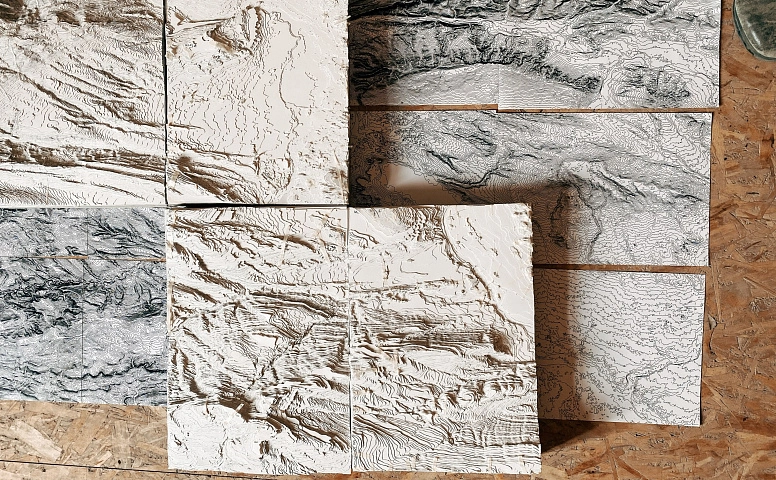
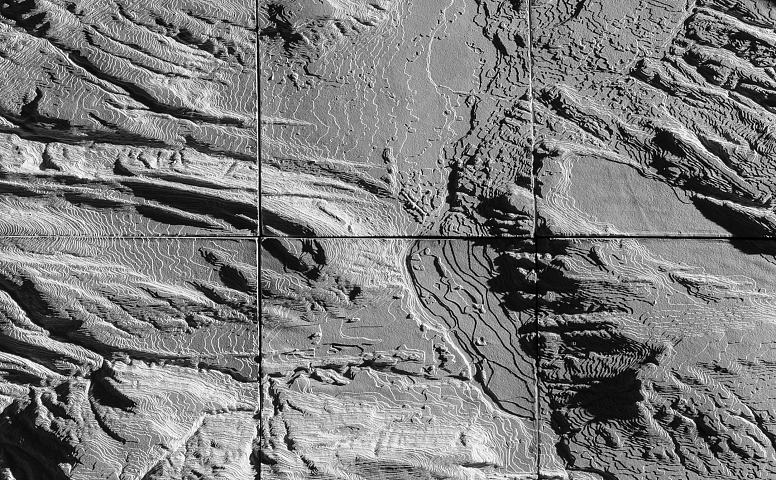
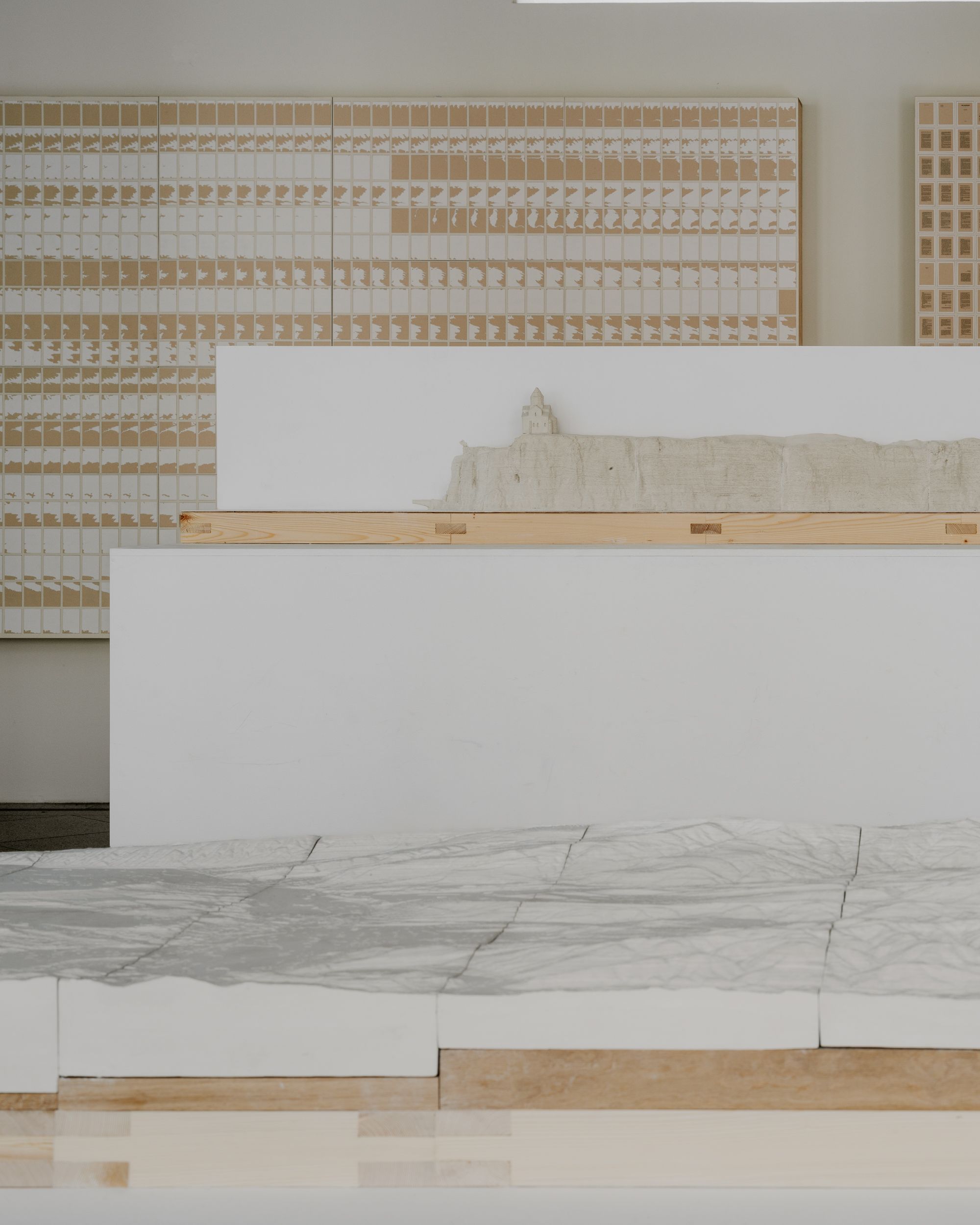
“Tbilisi — Risingland” showcases handmade works created during the Tbilisi Landscape Modeling workshop, held in September 2025 as part of Ubani’s educational program, led by Renato Rizzi. The workshop, which brought together around 100 participants, both local and international students and young professionals, resulted in the creation of two models of the city.
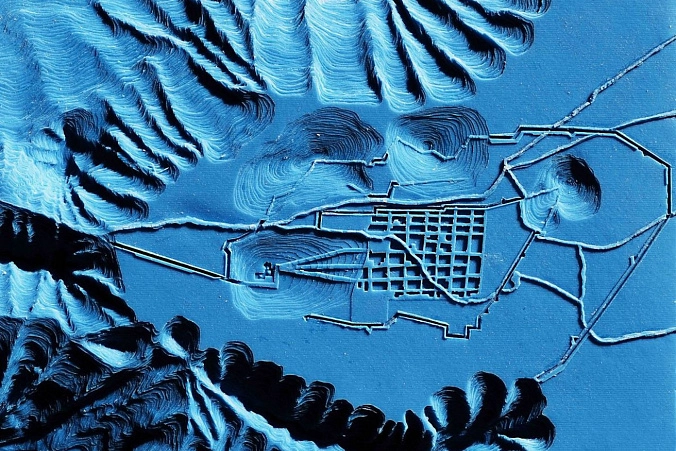
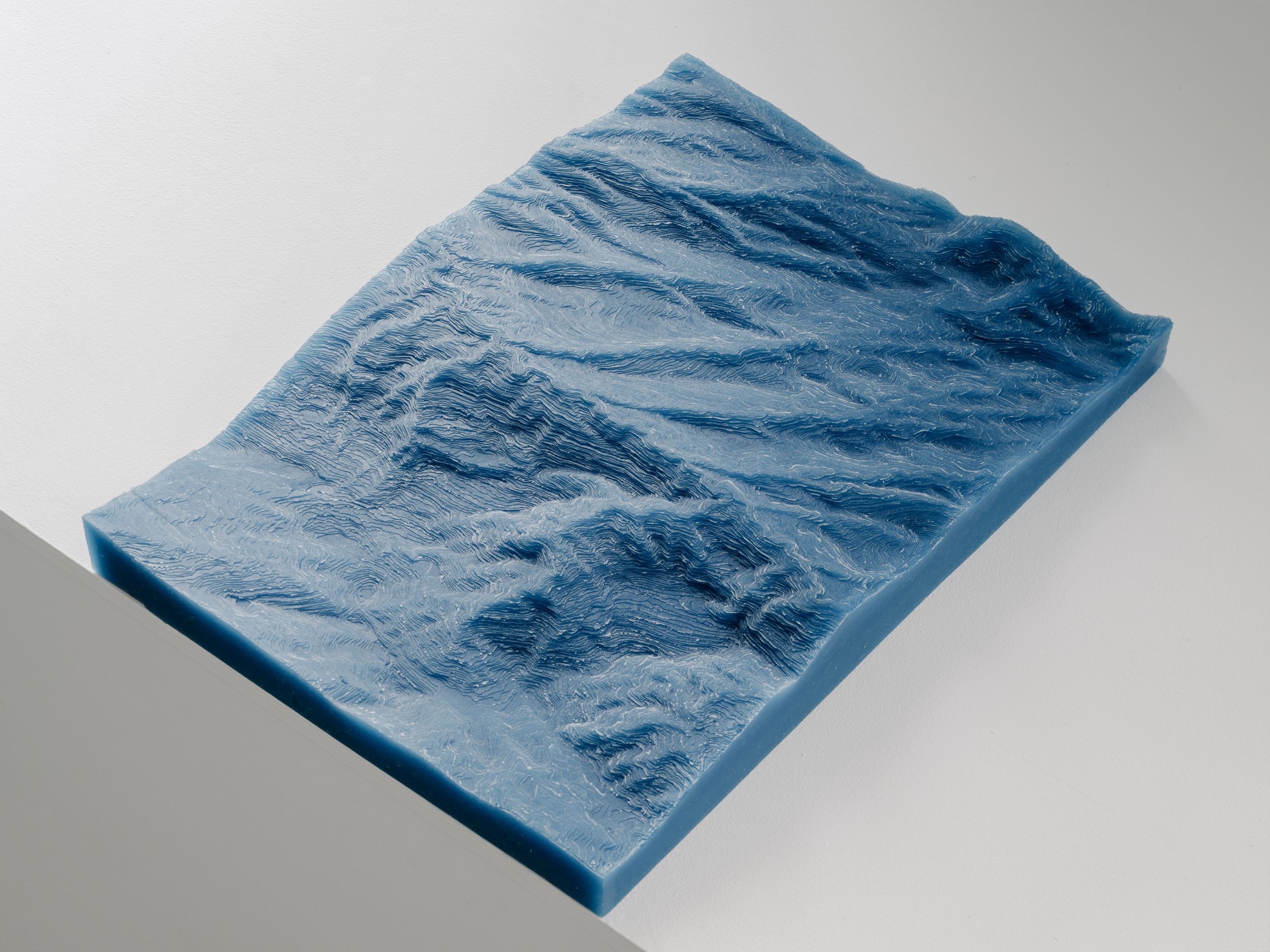
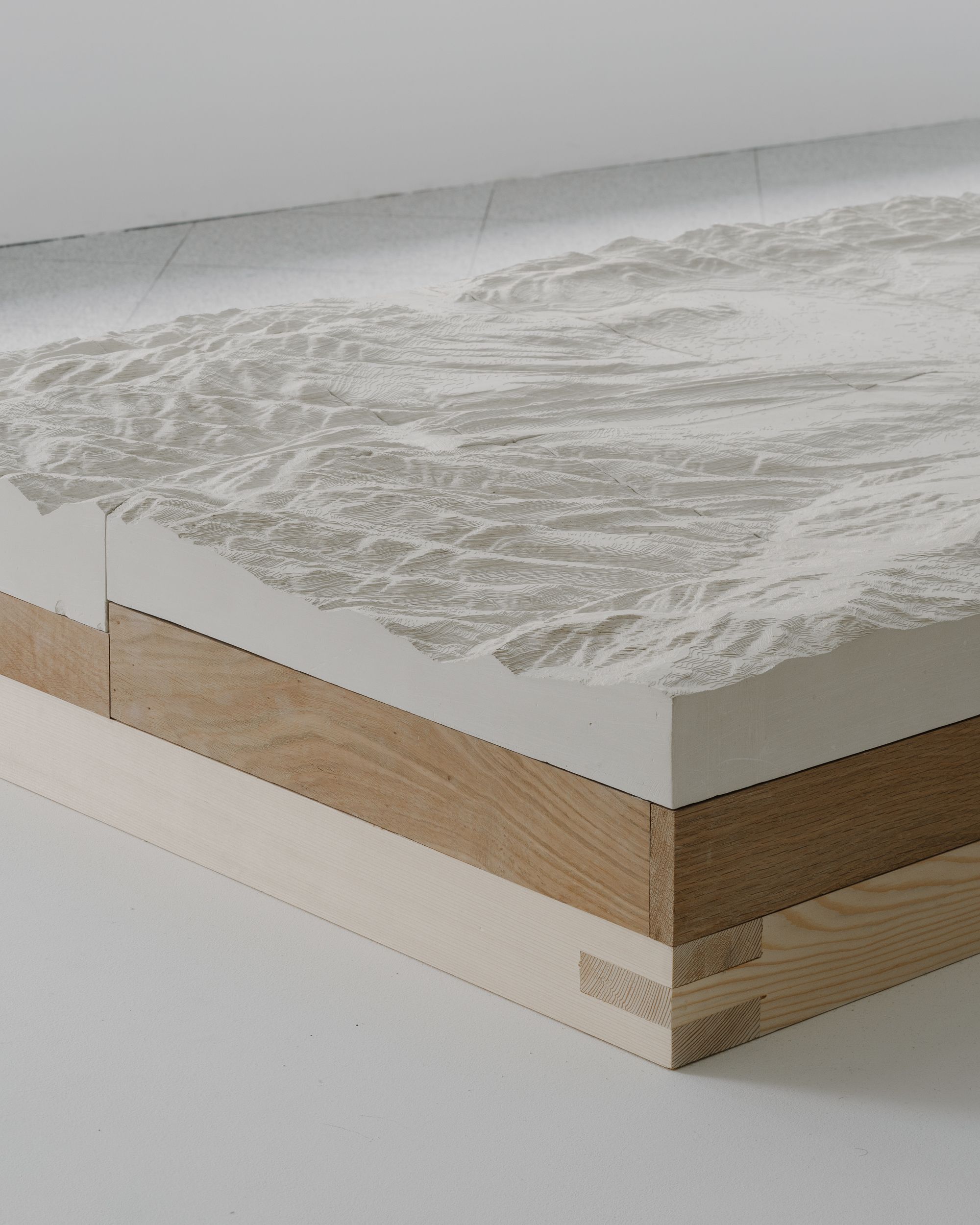
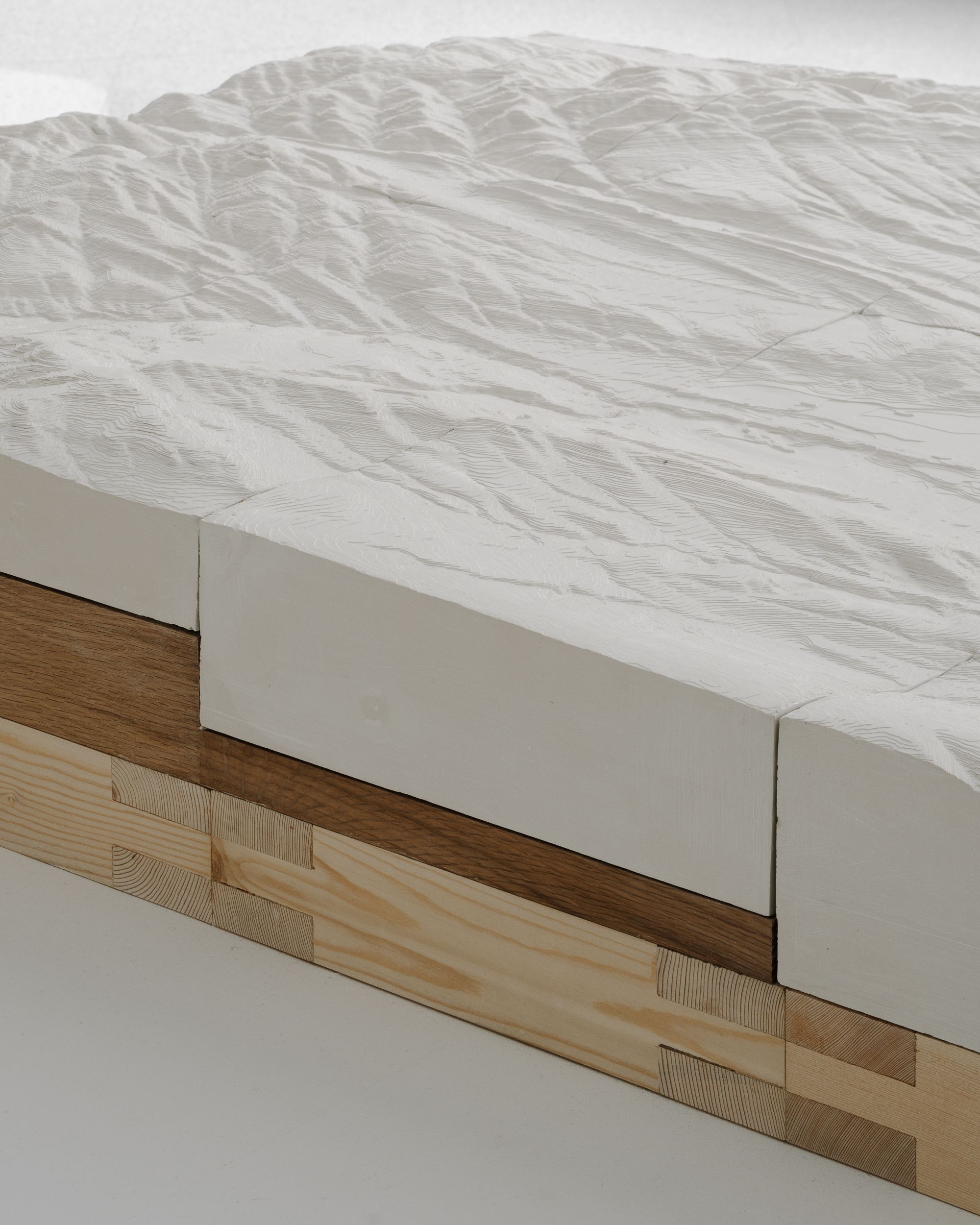
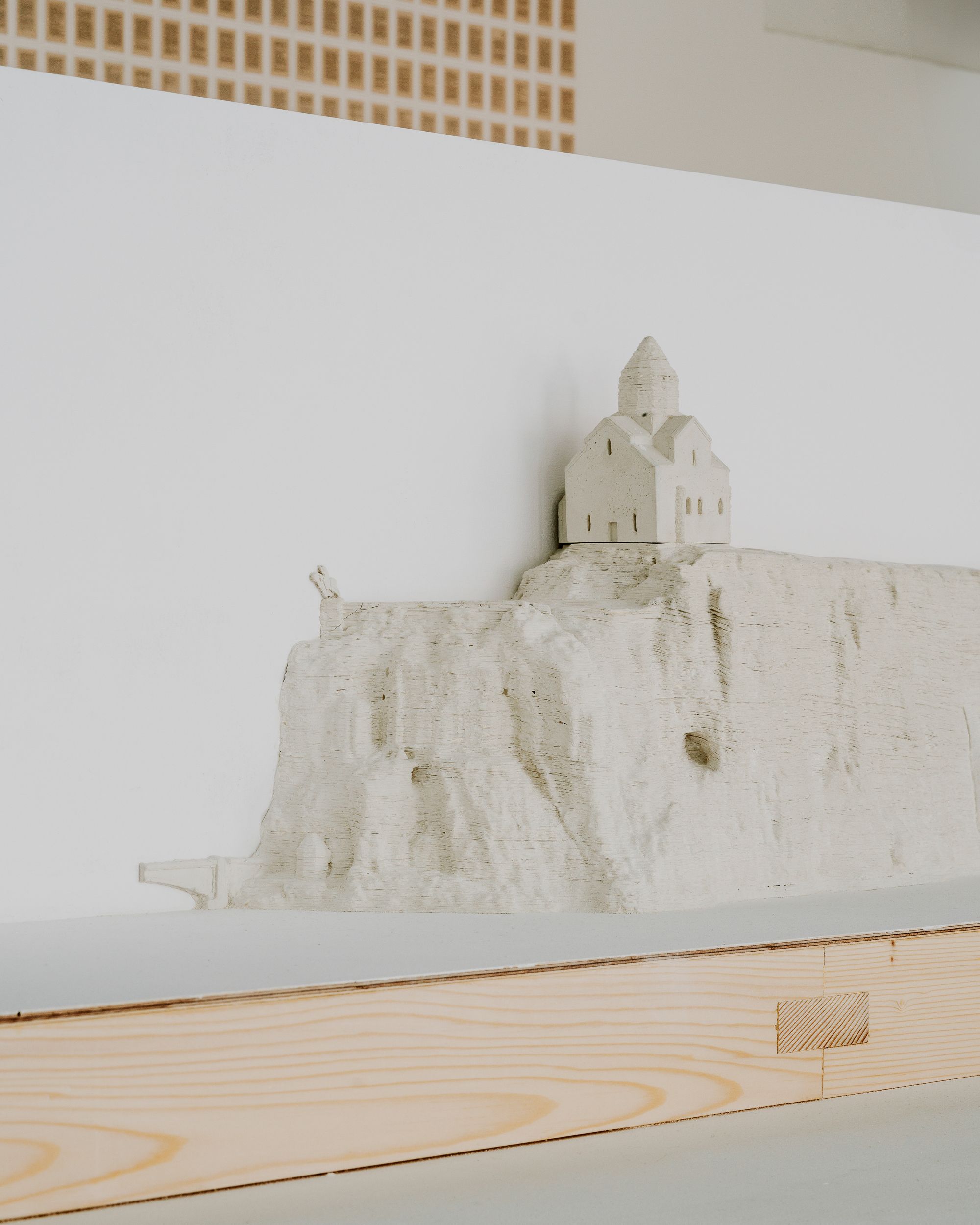
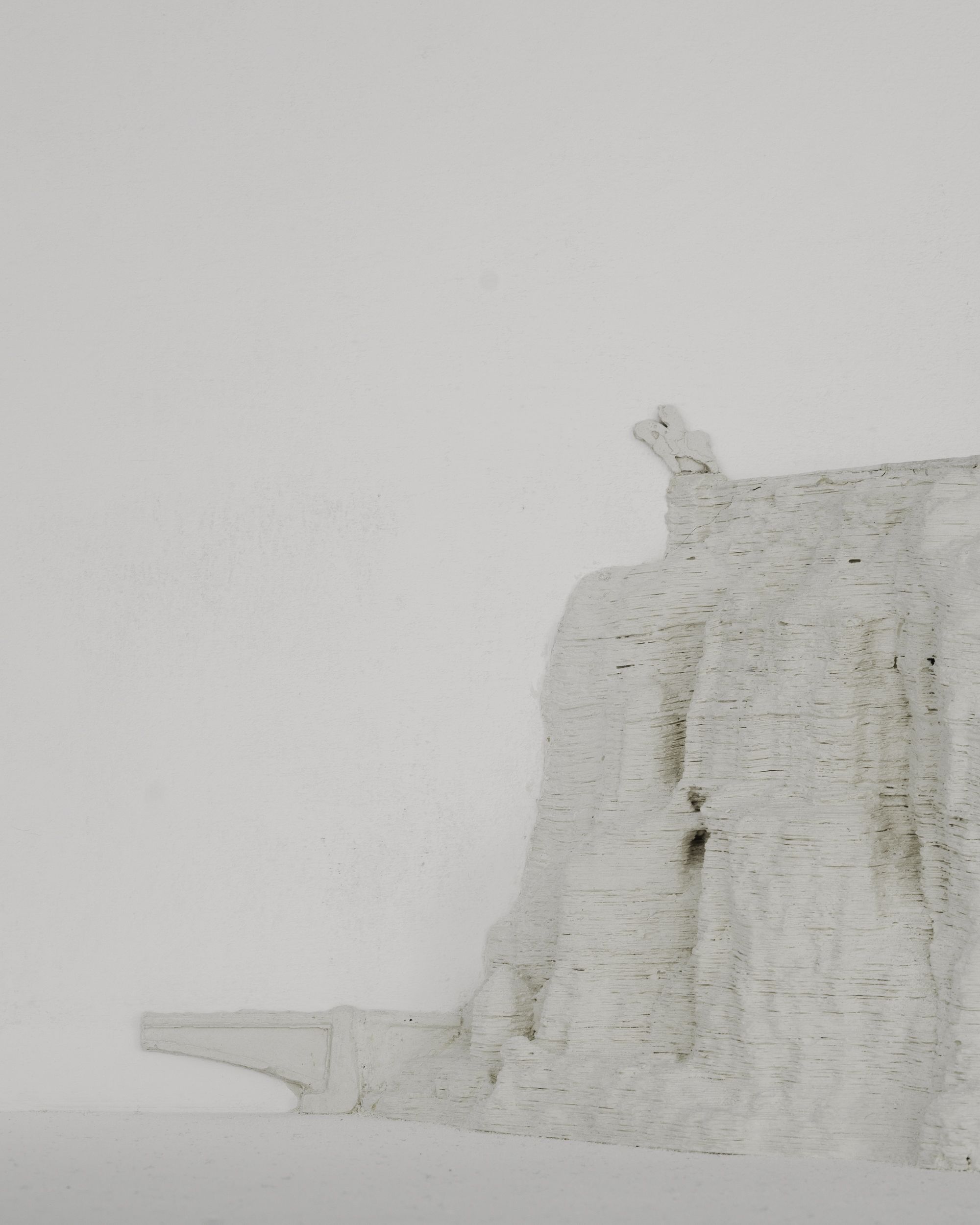
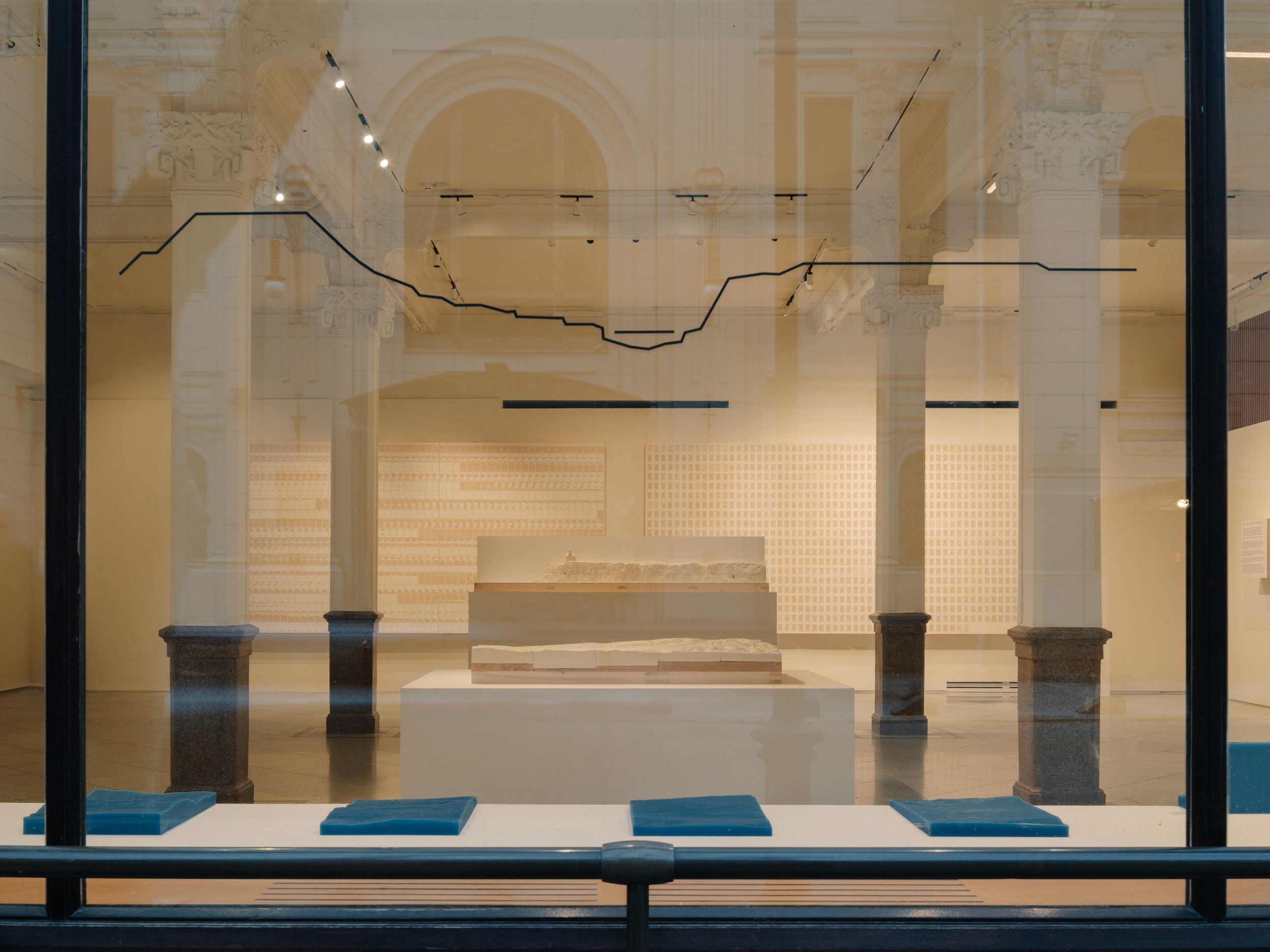
The workshop's working process involved various stages. The first of these was preparatory work, which included collecting topographic information. For the orthogonal model of Tbilisi, this information was gathered from geologists and topographers and processed according to the project, while for the panoramic model of Metekhi Cliff, the participants created the required drawings via 3D scanning. The next stage was printing the isohypses on watercolor paper, cutting them out one by one by hand, and gluing them together, from which the first positive model was created. Afterwards, the participants cast the silicone matrices (negatives) from the paper model, followed by the final stage of casting plaster positives from the silicone matrices as exhibition material.
This unique methodology, developed by Renato Rizzi and applied in this project to produce landscape models of various sizes and scales, aims to enhance the public’s understanding of the city’s landscape and provide a comprehensive view of Tbilisi, offering perspectives that are usually inaccessible.
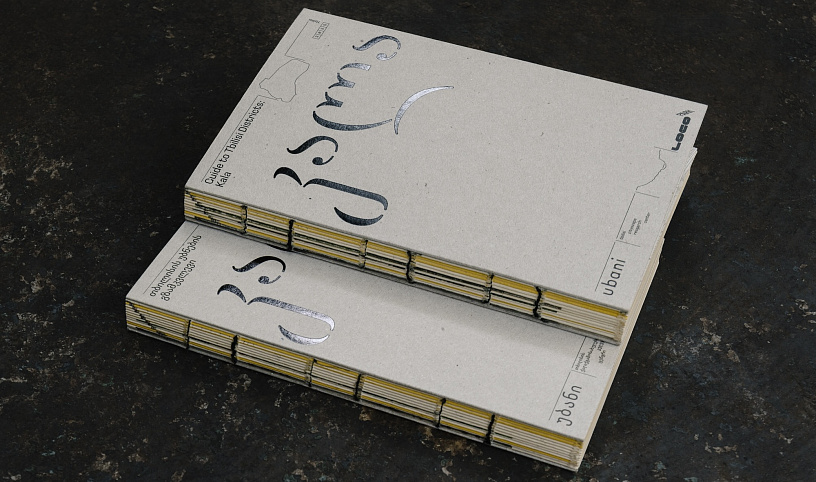
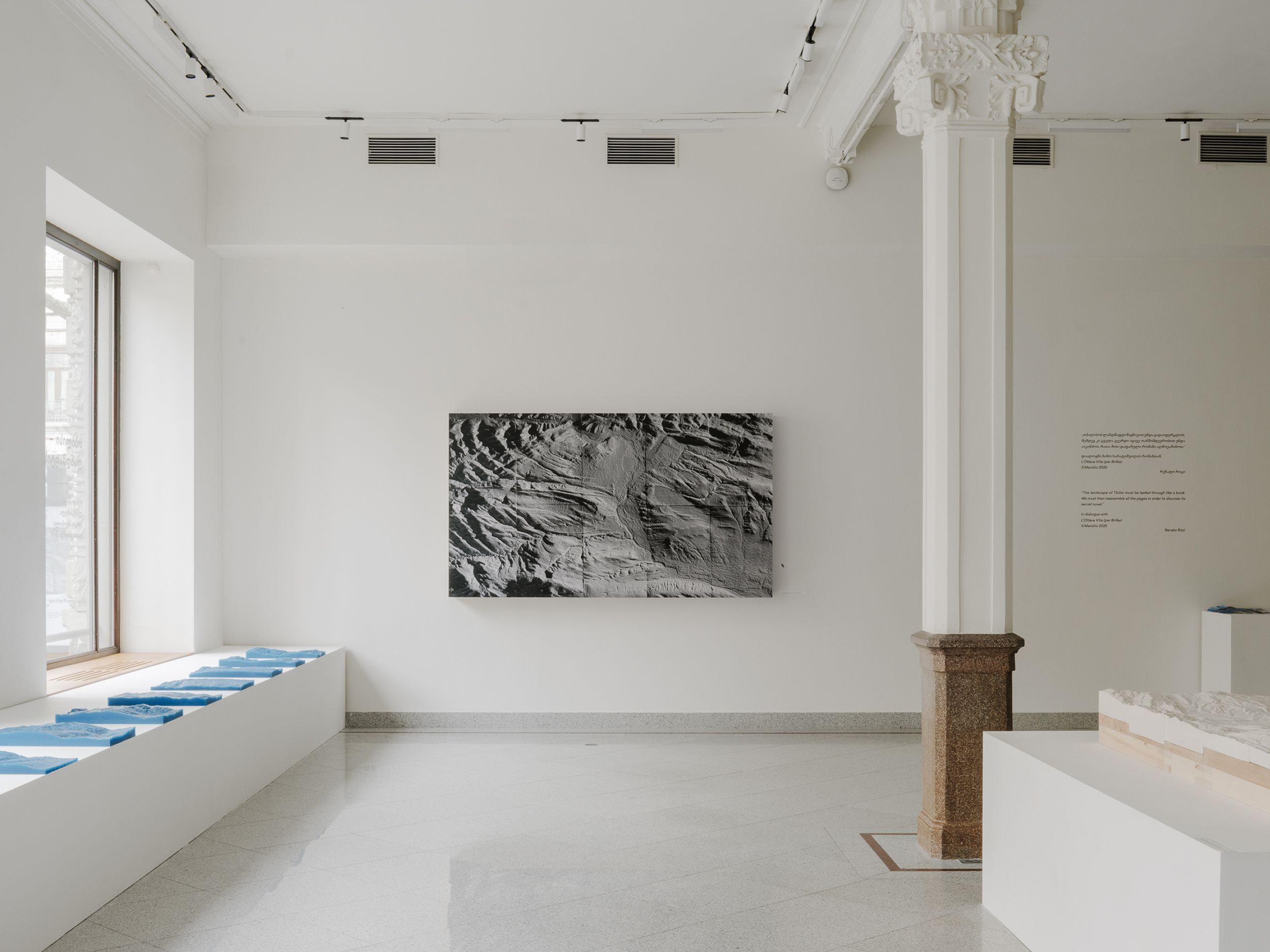
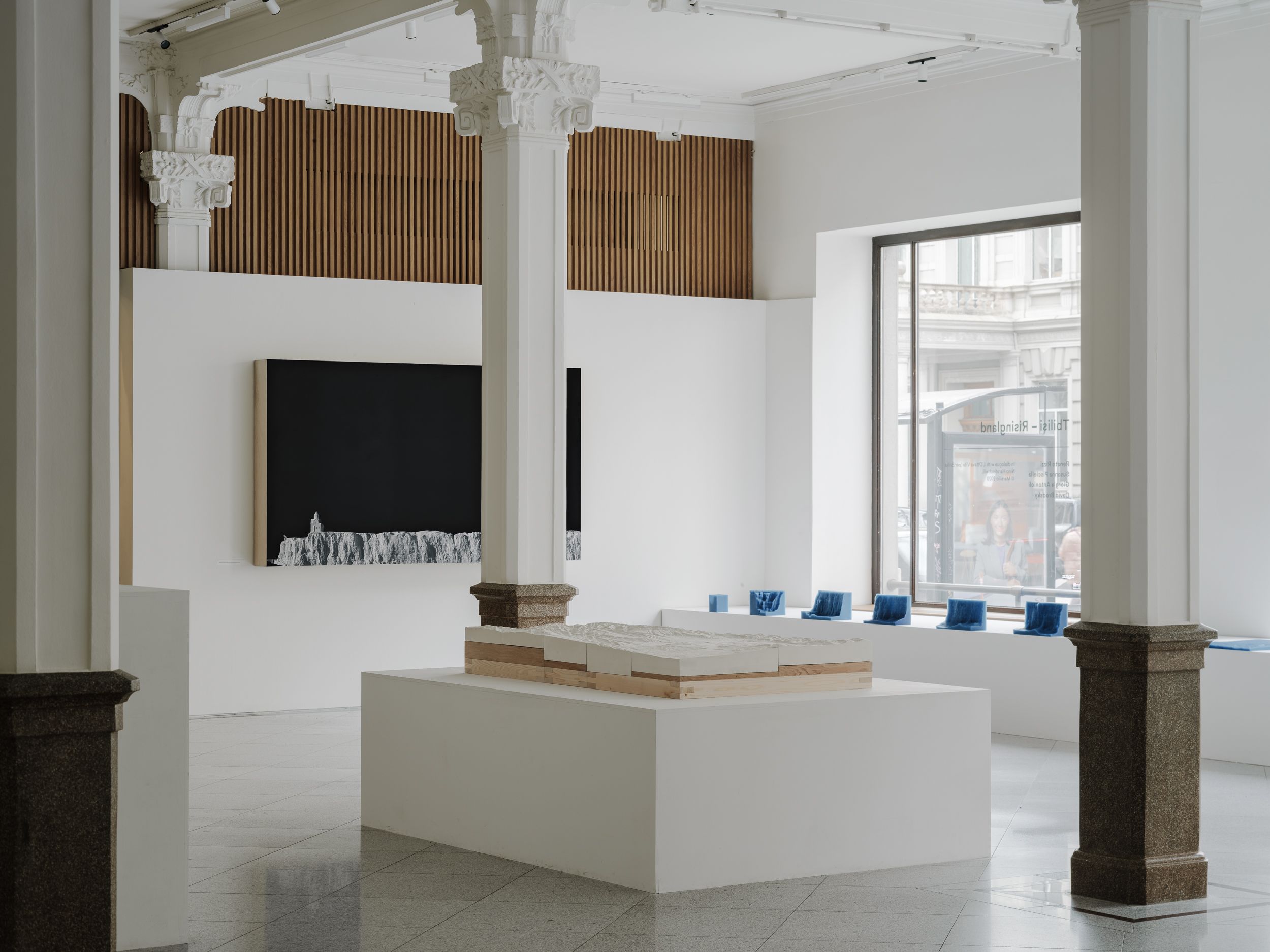
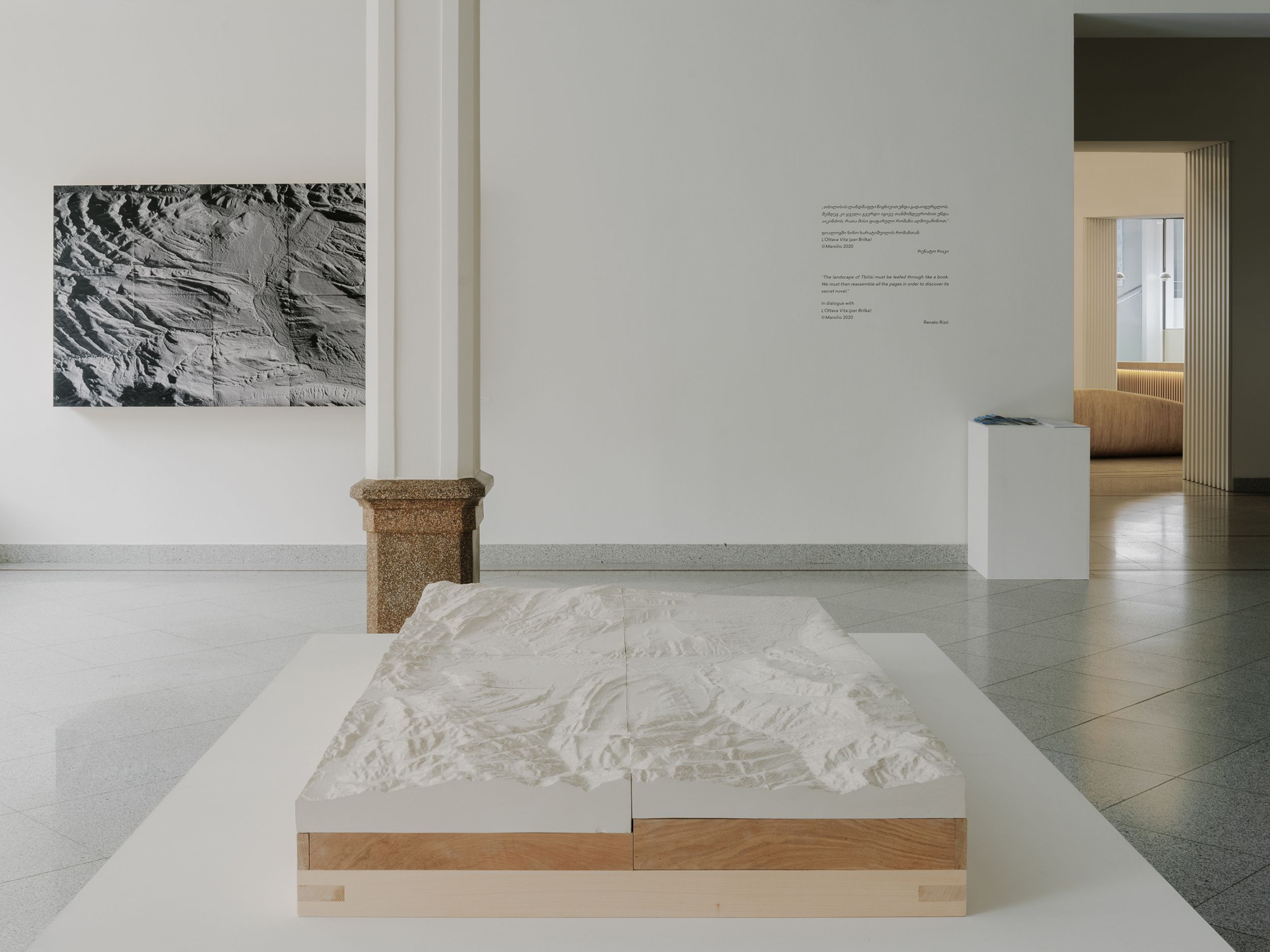
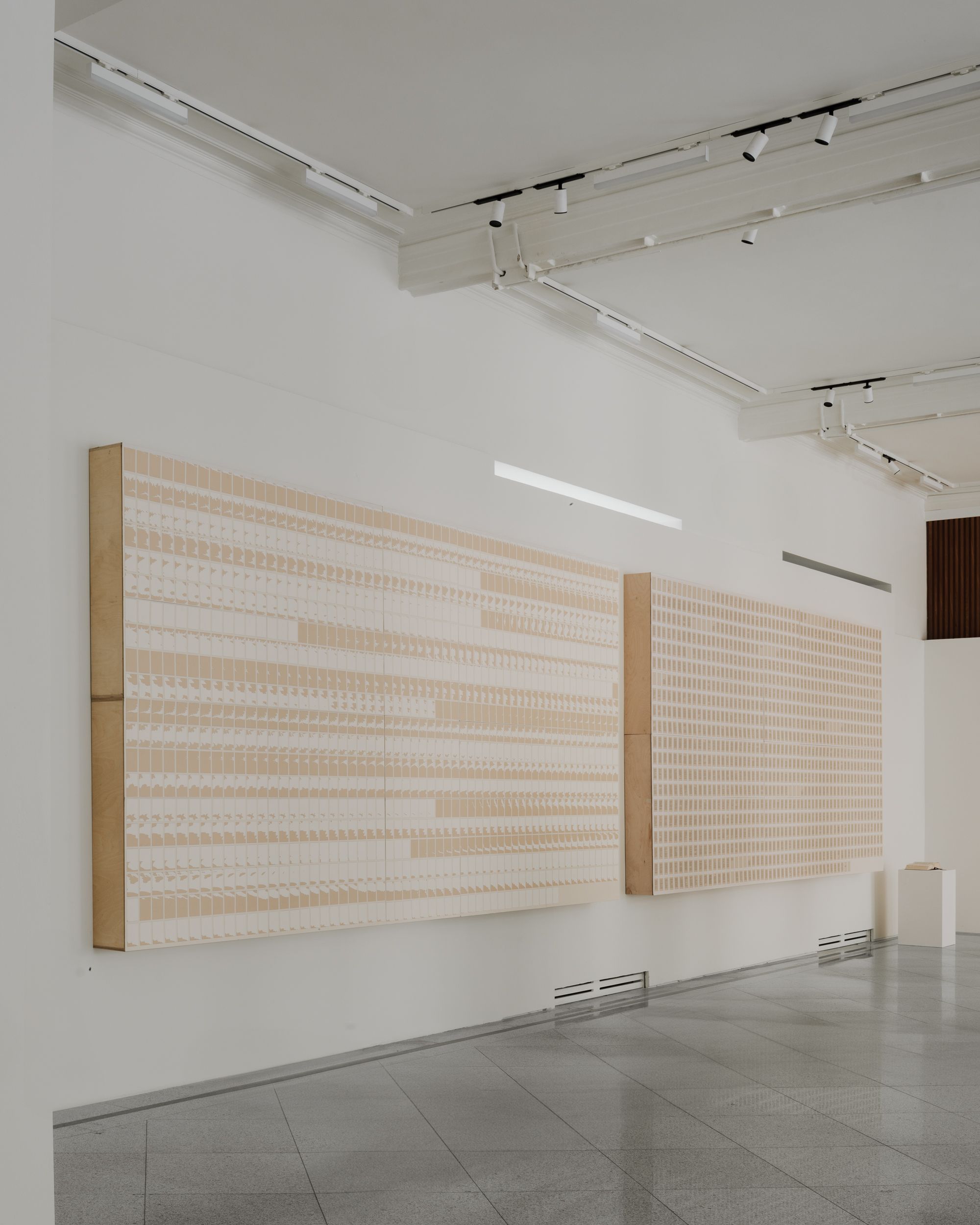
The exhibition includes the following works created during the workshop:an orthogonal model of Tbilisi with increased verticalities that create an intensified perspective, a model of Metekhi Cliff that explores the interiority of the city’s elevations, silicone negatives, photographs, and two panels. One panel shows the development of the drawing of isohypses used for the orthogonal model of Tbilisi at a reduced scale, featuring 1,131 isolines. The other panel displays each of the full-page spreads from L’Ottava Vita (per Brilka), a book by Nino Haratischvili, responding to the project’s core theme: a dialogue between architecture and literature emerging from the same historical and geological landscape.
As Renato Rizzi notes, the landscape is alive and erratic, full of layered meanings and values that go through hidden processes of transformation. This idea closely relates to his methodology, which seeks to bring to the surface the hidden and distant dimensions of the landscape. Similarly, L’Ottava Vita (per Brilka) uncovers the history of one family across multiple generations. According to Rizzi, its central character, Brilka, the girl to whom the book is dedicated, embodies the indomitability of arché, symbolizing the landscape itself. In this sense, the generations described in the book reflect the layered formation of the landscape of Tbilisi, explaining the relationship between architecture and literature.
The project is organized by Ubani and supported and hosted by TBC Concept Gallery.
Project partners are the Embassy of Italy in Georgia, Kinos Hub, Gravita, ibis Budget Tbilisi Center, NWDS, IUAV University of Venice, Apollon Kutateladze Tbilisi State Academy of Arts, and Ilia State University (Iliauni B.Arch).
Wooden structures for the exhibition were created by Kao Furniture, Aleksandr Aleksandrov, and Nikita Vagin.
Installation views by Grigory Sokolinsky.
Exhibition opening photos by David Brodsky.